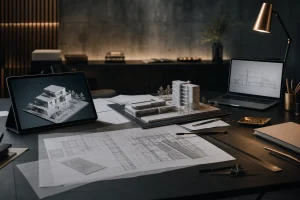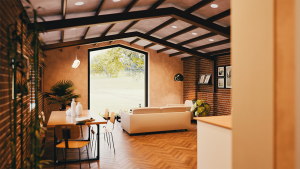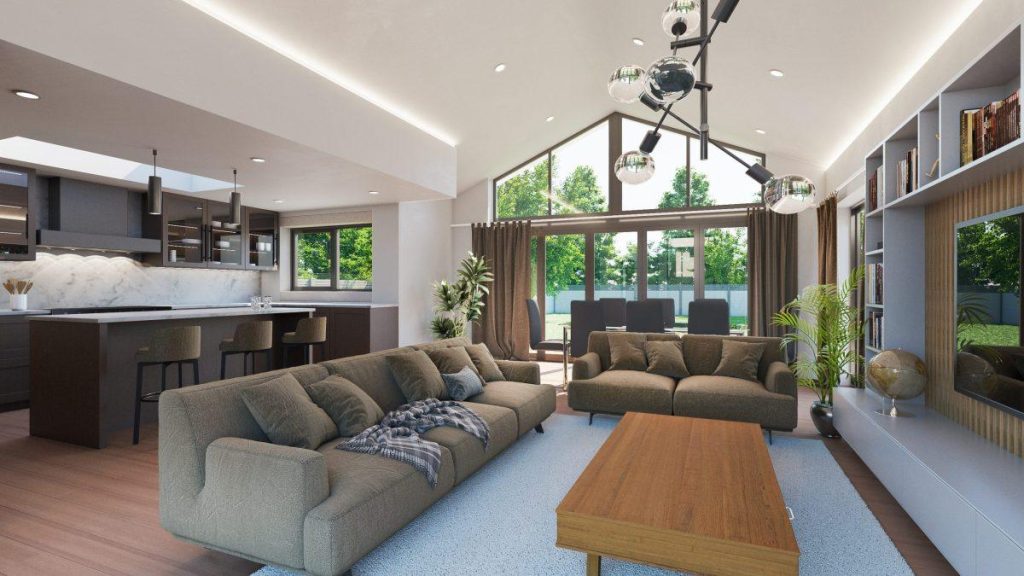
Many people assume that architecture begins with how a building will look from the outside. The façade, the materials, perhaps a particular style they have in mind.
That assumption is understandable, but it slightly misses where most architectural thinking actually starts.
In practice, architects often begin somewhere quieter. Before style enters the conversation, there is usually a period of thinking about space, how it will be used, and how it might feel to move through.
It may not sound as exciting as choosing finishes, yet it is likely to shape the success of a building far more than its appearance alone.
Space as a Response to Human Behaviour
At an early stage, architects tend to focus on people rather than forms. They think about daily routines, habits, and moments that repeat without much thought. Making a cup of tea in the morning, answering the door, working at a table that catches the afternoon light.
These small actions quietly influence the size, position, and relationship of spaces.
This way of thinking helps architecture respond to real life rather than idealised drawings.
A hallway that feels generous, a kitchen that works during busy evenings, or a living space that allows both conversation and retreat. These decisions often happen before any discussion of colour or style appears.
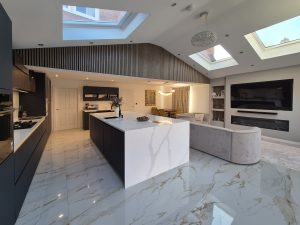
Function Before Form
Function has a habit of asserting itself early on. Storage, circulation, accessibility, and privacy all need to work if a building is to feel comfortable.
Architects often sketch layouts that test these basics first, knowing that problems here are difficult to disguise later.
There can be a temptation to prioritise visual impact, but form without function tends to reveal its flaws quickly.
A beautiful room that is awkward to furnish or a striking stair that disrupts movement may look impressive in photographs, yet frustrate daily use. Addressing function early helps avoid these compromises.
Light, Proportion, and Volume
Natural light plays a quiet but powerful role in how spaces are shaped. Architects may spend time considering where light enters, how it changes throughout the day, and how it moves from one room to another. This thinking often informs window placement, ceiling heights, and even the depth of rooms.
Proportion and volume also matter more than they first appear. A modest space with good proportions can feel calm and generous, while a larger one may feel uncomfortable if the balance is off.
These spatial qualities are difficult to correct later, which is why they tend to be resolved before style is discussed.
The Relationship Between Spaces
Architects rarely see rooms as isolated boxes. Instead, they think about how spaces relate to one another and how people move between them.
Transitions, thresholds, and views through a building can influence whether it feels open, private, or somewhere in between.
This relational thinking helps create a sense of flow. A kitchen that connects naturally to a dining area, or a stair that becomes part of everyday life rather than an afterthought.
These relationships often define how a building is experienced, even if they are not immediately obvious.
Context and Constraints
Every project sits within a set of boundaries, both physical and regulatory. Site shape, neighbouring buildings, daylight rules, and budget constraints all influence early spatial decisions.
Rather than treating these as obstacles, architects often see them as factors that guide the layout.
Working within constraints can sharpen spatial thinking. Limited space may encourage more efficient layouts, while planning requirements might influence where rooms are placed.
These early responses to context often shape the building more profoundly than later stylistic choices.

Style as a Consequence, Not a Starting Point
Once the spatial framework feels resolved, style tends to follow more naturally. Materials, finishes, and external expression can then respond to the spaces they support rather than dictating them.
This approach may result in architecture that feels more coherent and less forced.
Style chosen too early can sometimes restrict good spatial ideas. Allowing space to lead may mean the final appearance is slightly different from initial expectations, yet often more considered.
In many cases, the style feels inevitable because it grows out of the way the building works.
Why This Matters to Clients
For clients, understanding this process can change how conversations with an architect unfold.
Focusing discussions on how spaces will be used, rather than how they will look, often leads to more meaningful decisions early on.
It may also help manage expectations. When style is introduced later, it is usually grounded in practical reasoning rather than trends alone.
Clients who engage with spatial thinking tend to feel more confident in the design, even before the visual details are finalised.
Closing Thoughts
Good architecture often appears effortless, but that simplicity is rarely accidental.
It is usually the result of careful thinking about space, movement, and use before any stylistic gestures are made.
By placing space before style, architects aim to create buildings that work quietly and age well.
The visual outcome still matters, of course, but it tends to succeed precisely because the spatial foundations were given the attention they deserved from the start.